User feedback

They design their room with HTM.

Before pouring a slab or raising a wall, some users already model their project in Home Theater Maestro, then come back to compare the software's predictions with the measurements taken once the room is built. Here is their feedback, as it is.

Portrait of Yann, a Home Theater Maestro user

Yann

HTM user · currently building a dedicated room
RT60 confirmed by REW

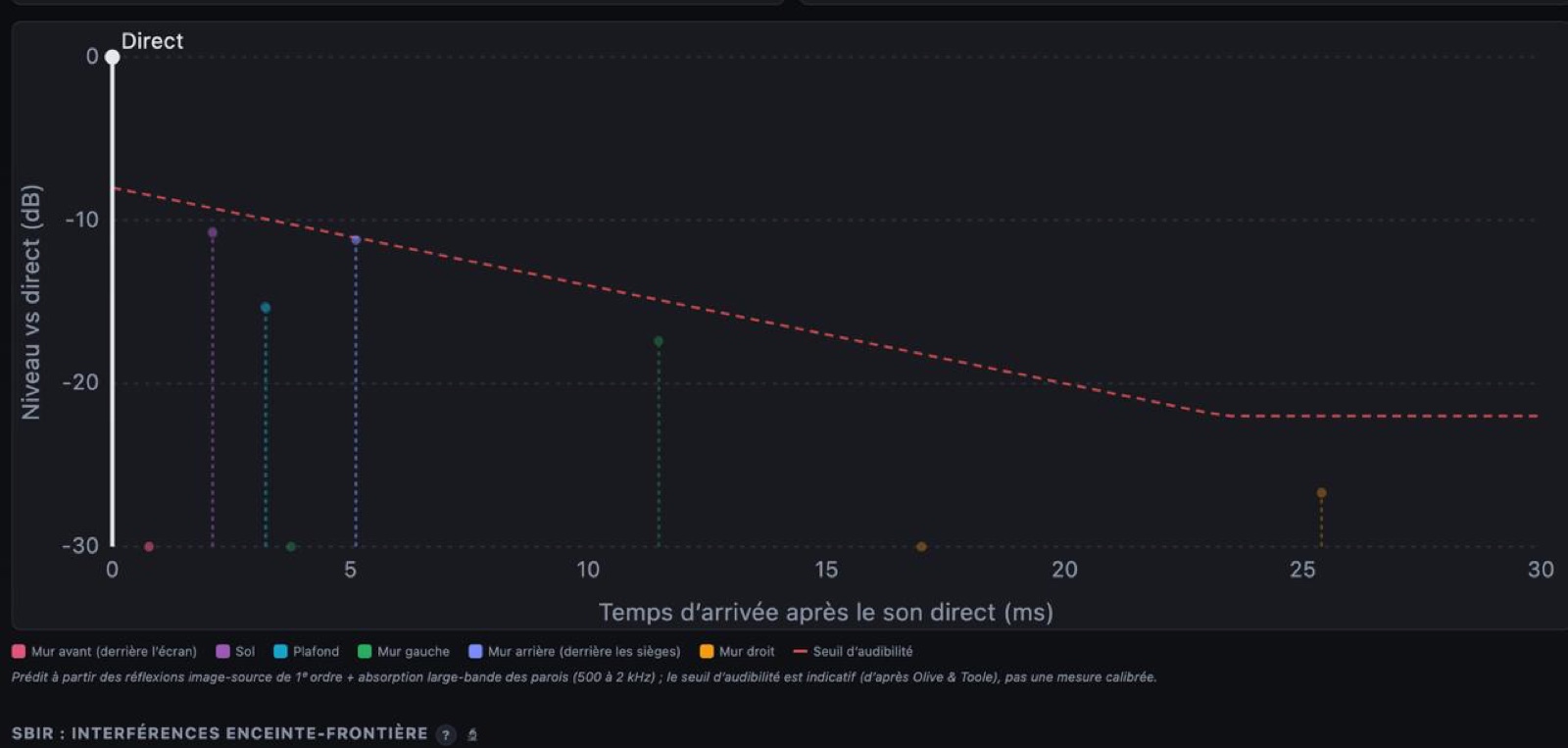
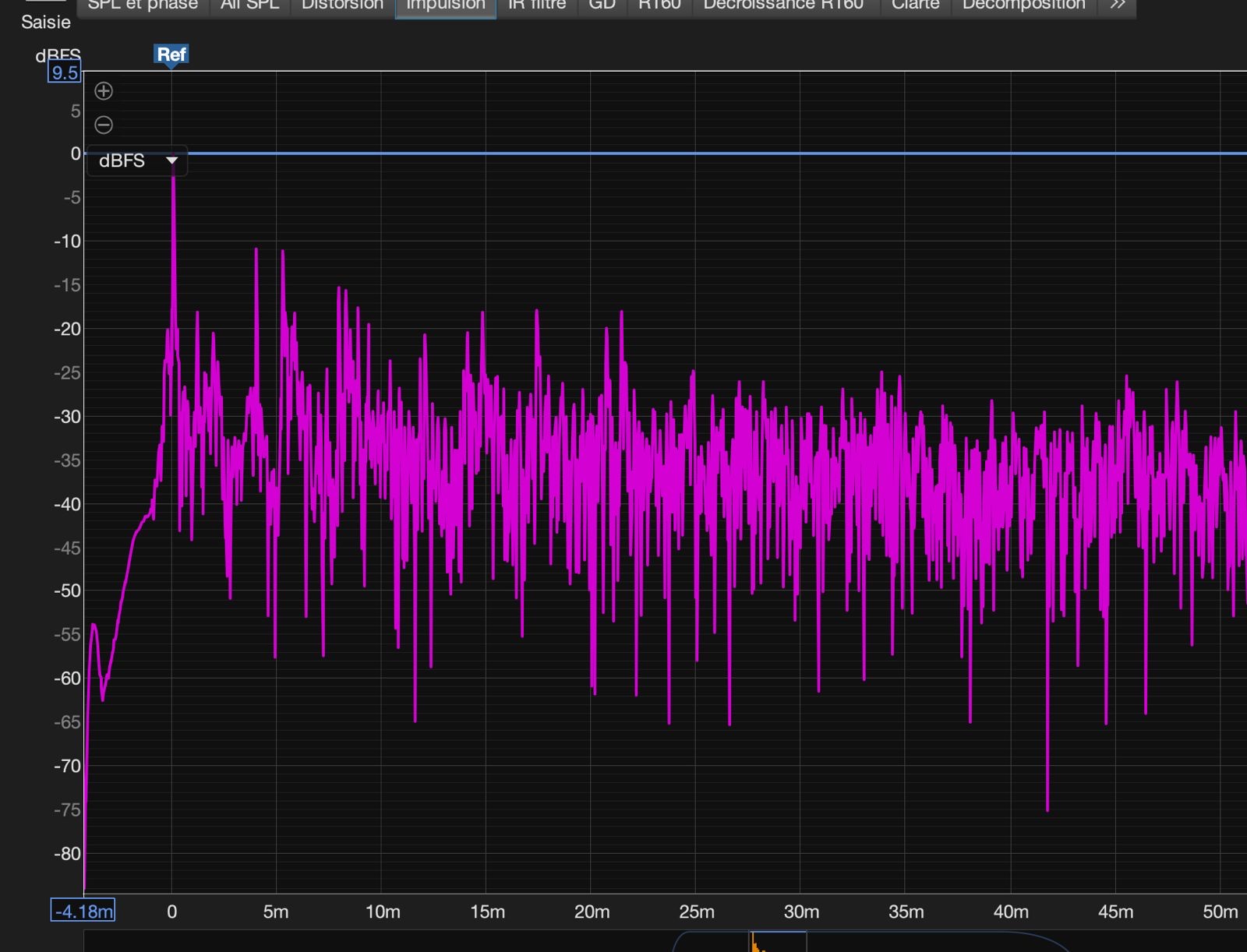
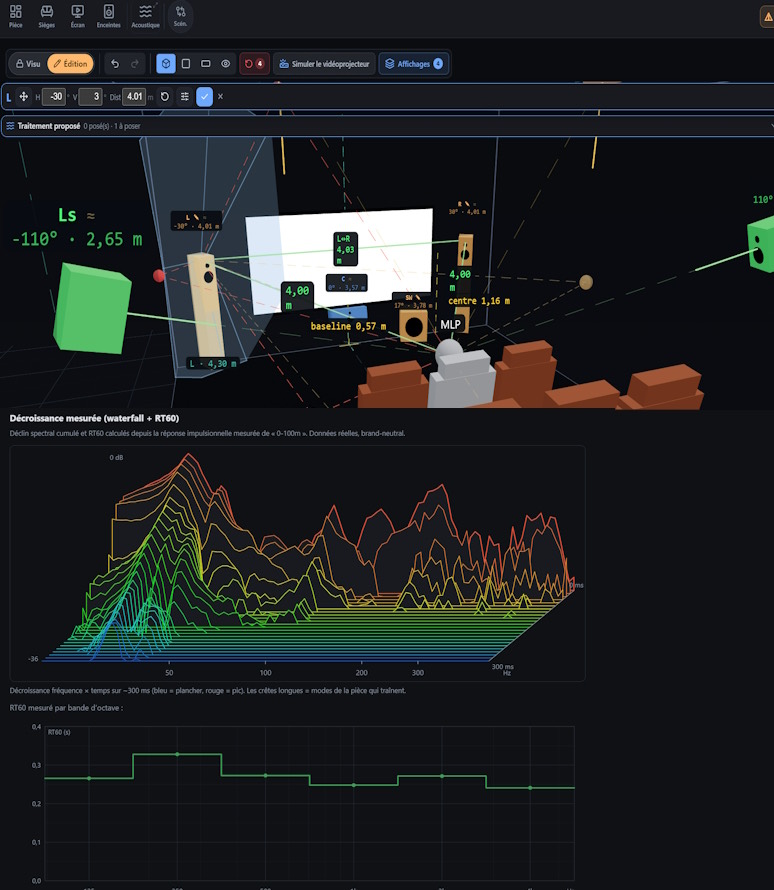
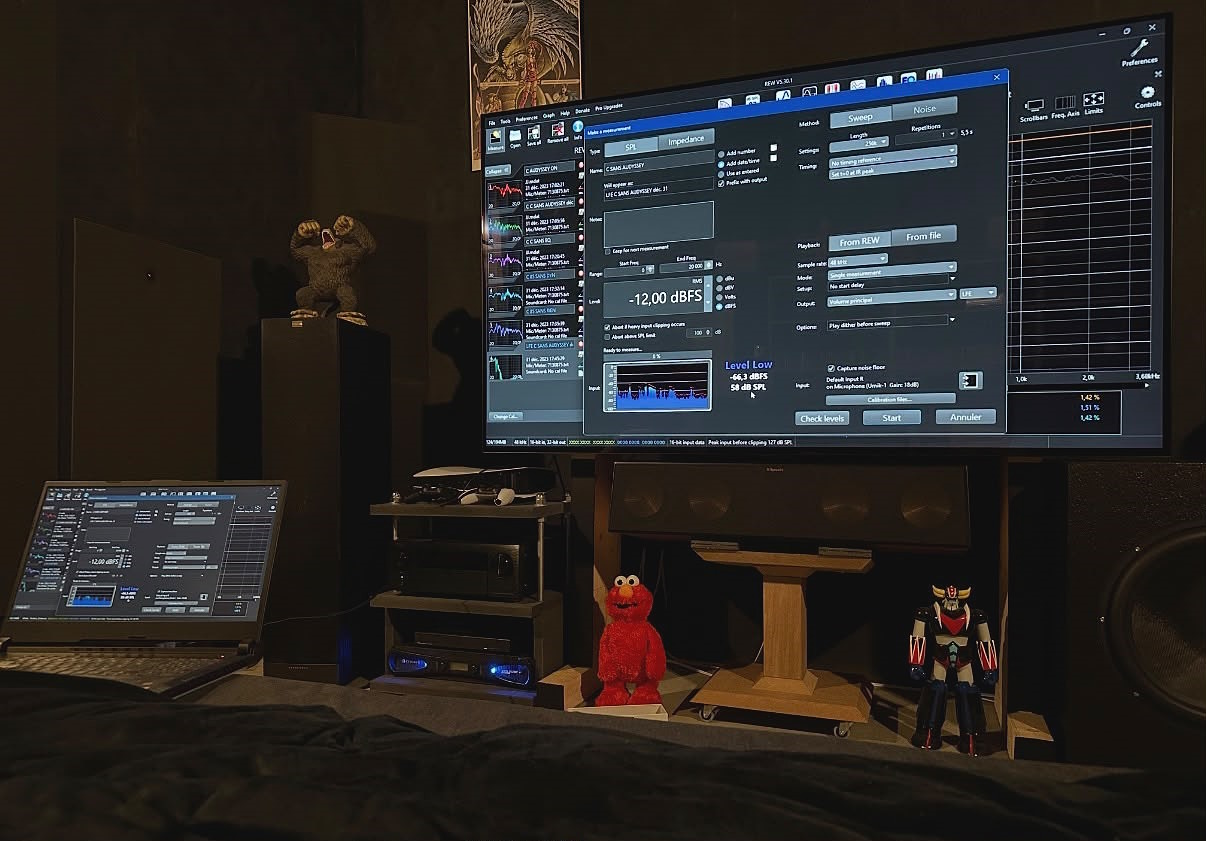
Yann modelled the room in the software and let HTM predict the expected acoustic behaviour, then went to check those predictions with a measurement microphone, using REW. It was that comparison, made on an already-finished room, that convinced him of the tool's reliability.

“On my previous room, I took all my REW curves and compared them with the RT60 values predicted by HTM, band by band. The differences were minimal, well within what I would expect with a measurement mic. I also liked the cable-length calculation.”Yann

Today, Yann is building a dedicated room, this time with concrete walls: a very different acoustic context from his previous room, and stricter design constraints. He was able to use HTM and compare the results against manual measurements.
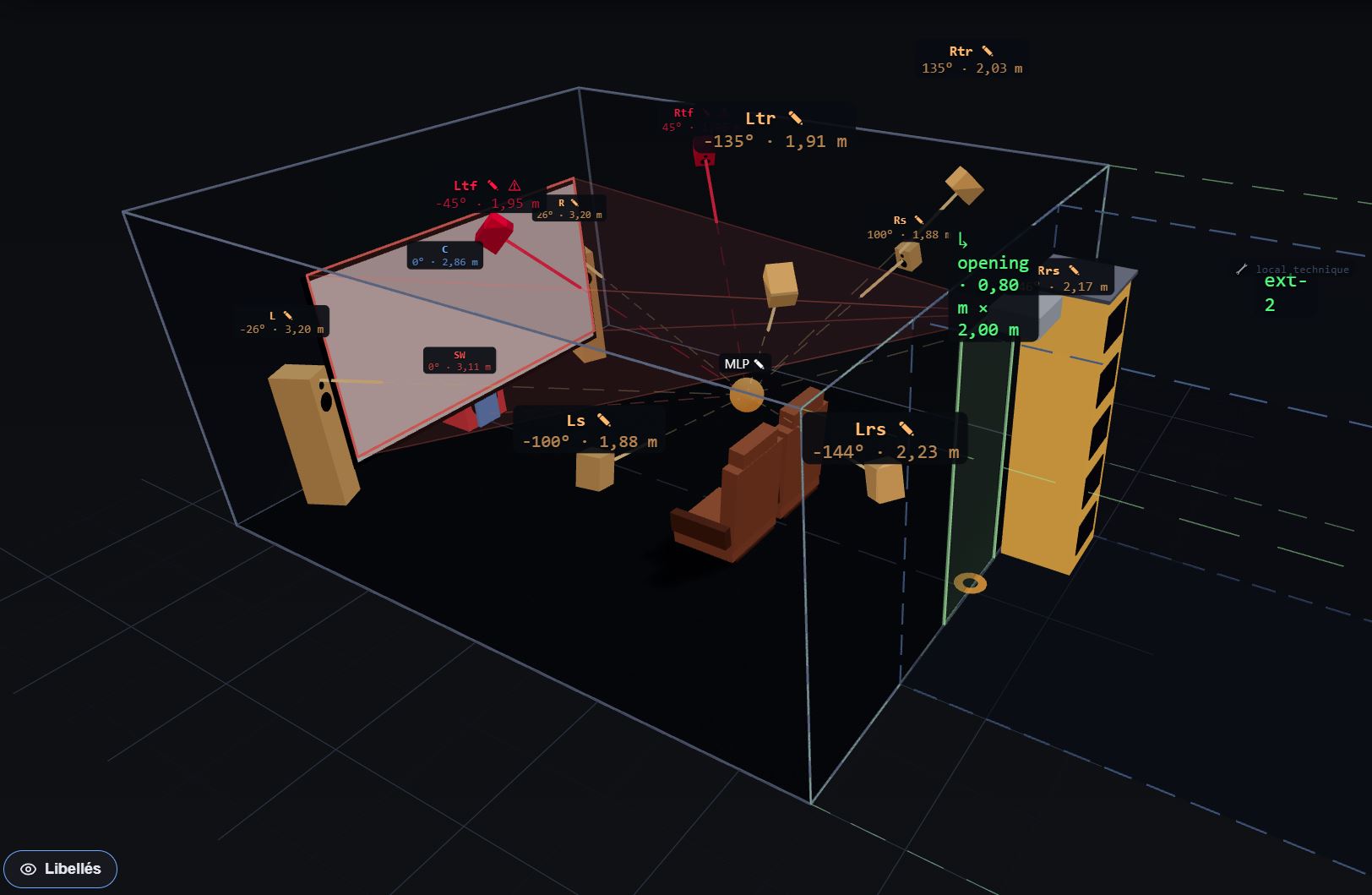
Home Theater Maestro · room modelling
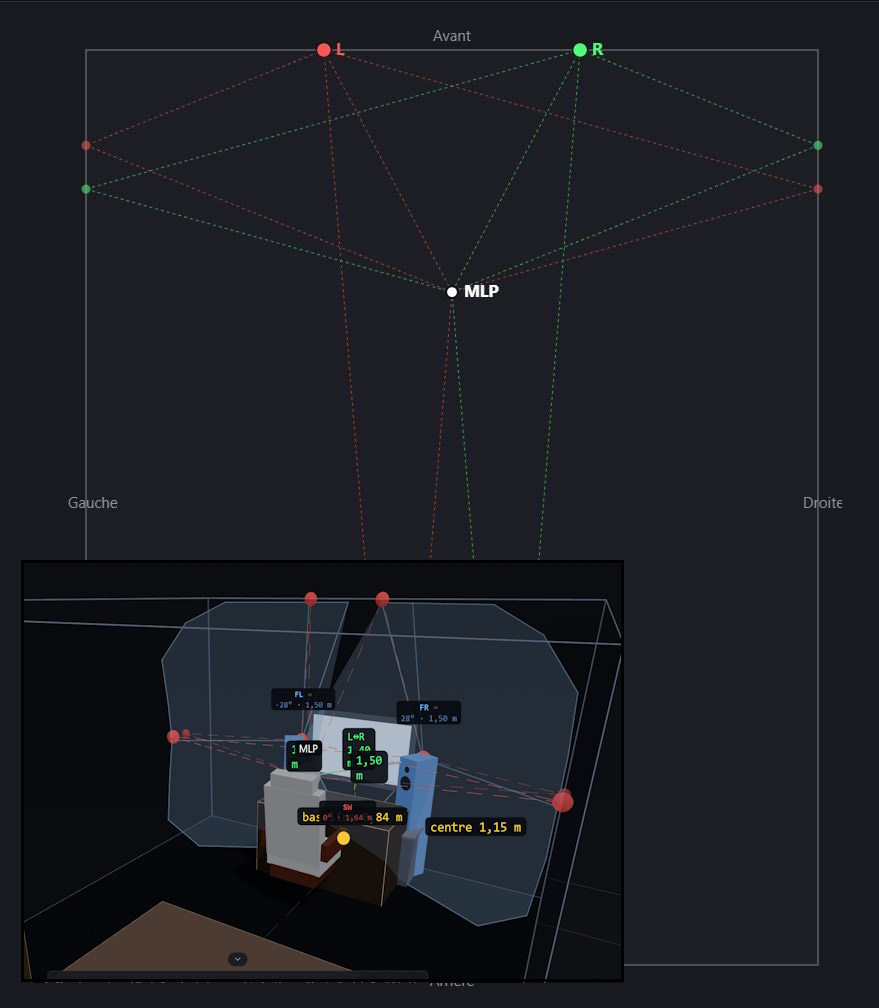
3D model of Yann's new home cinema in Home Theater Maestro, concrete walls, before the build was finished
Yann's new room modelled in HTM, during construction: concrete walls with membrane bass traps, diffusers and absorption panels.

Before the build was even finished, HTM let him:

  • easily model his room in 3D, with the real constraints of the site (concrete walls, final dimensions);
  • anticipate the room's acoustic behaviour before the first treatment was installed;
  • confirm his RT60 values, found again later during the first REW measurements once the room was built;
  • save time in the design of the project, by settling certain choices before they were set in concrete, quite literally.

Yann also highlights a very useful feature: the projector-position simulation. It let him check the placement of the unit and the resulting image size before installation, rather than discovering it afterwards with a tape measure and the zoom control.

“The projector simulation: it let me check the placement and the image size before I had even installed anything.”Yann

For Yann, HTM's value lies less in a promise of perfection than in its consistency: what the software announces before the work is what he then finds at the microphone. Enough to move forward on a project as demanding as a concrete room with a little less uncertainty.
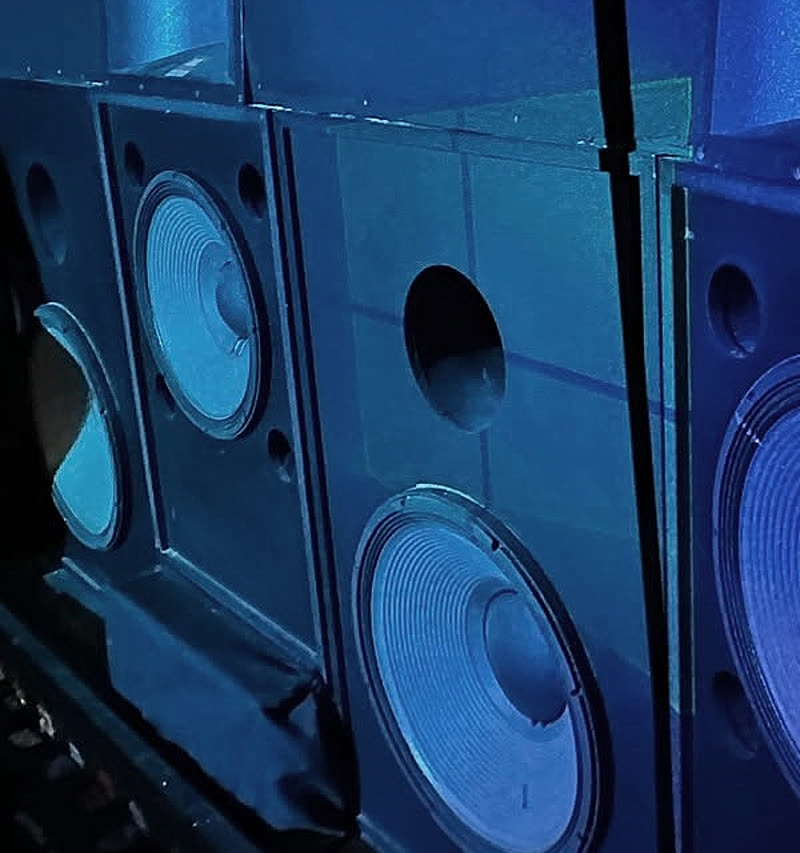
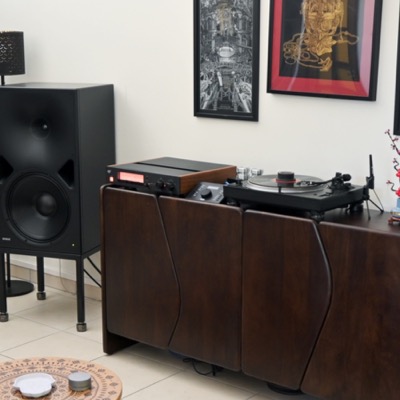
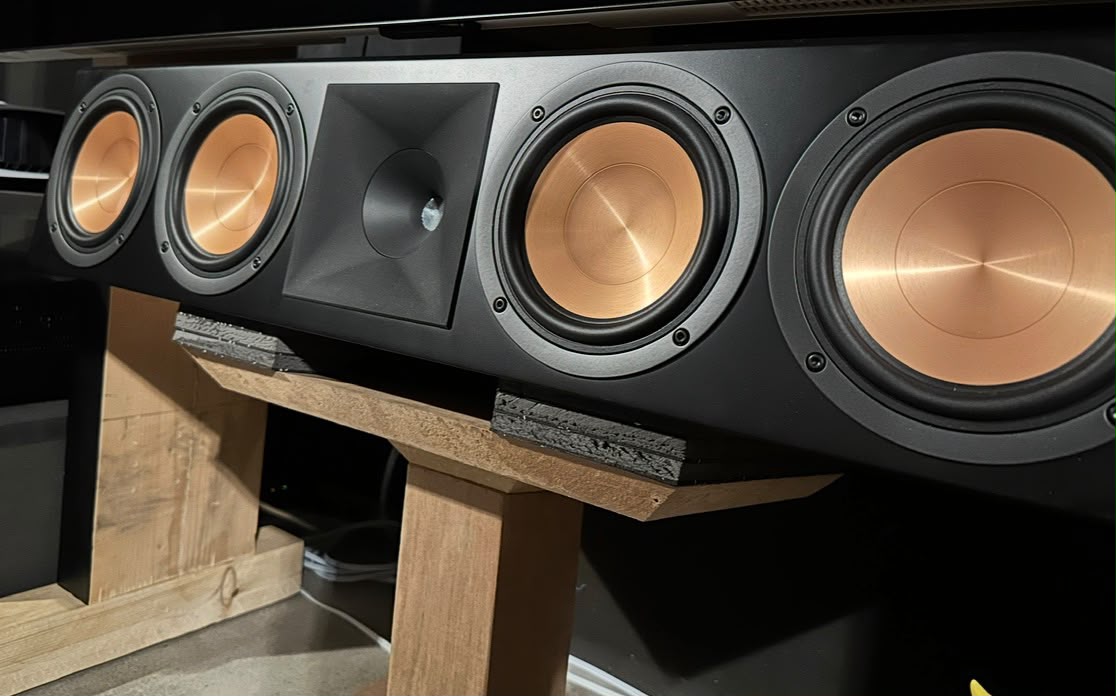
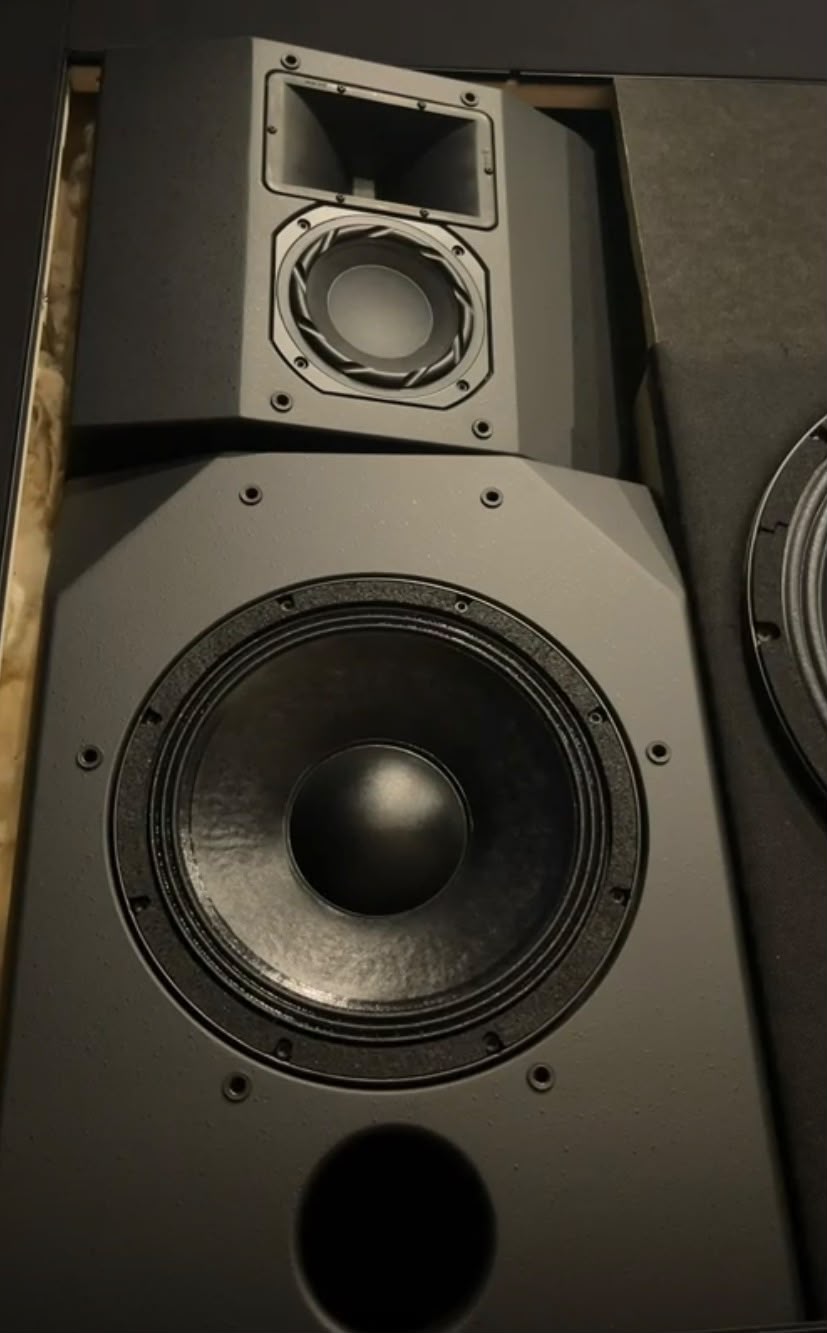
Close-up of a cinema loudspeaker from Steven's room

Steven

HTM user · upgrading an existing room to Dolby Atmos
Atmos upgrade validated before the work

I've been using a room fitted with a professional cinema loudspeaker system for several years, in a 7.1 array configuration.

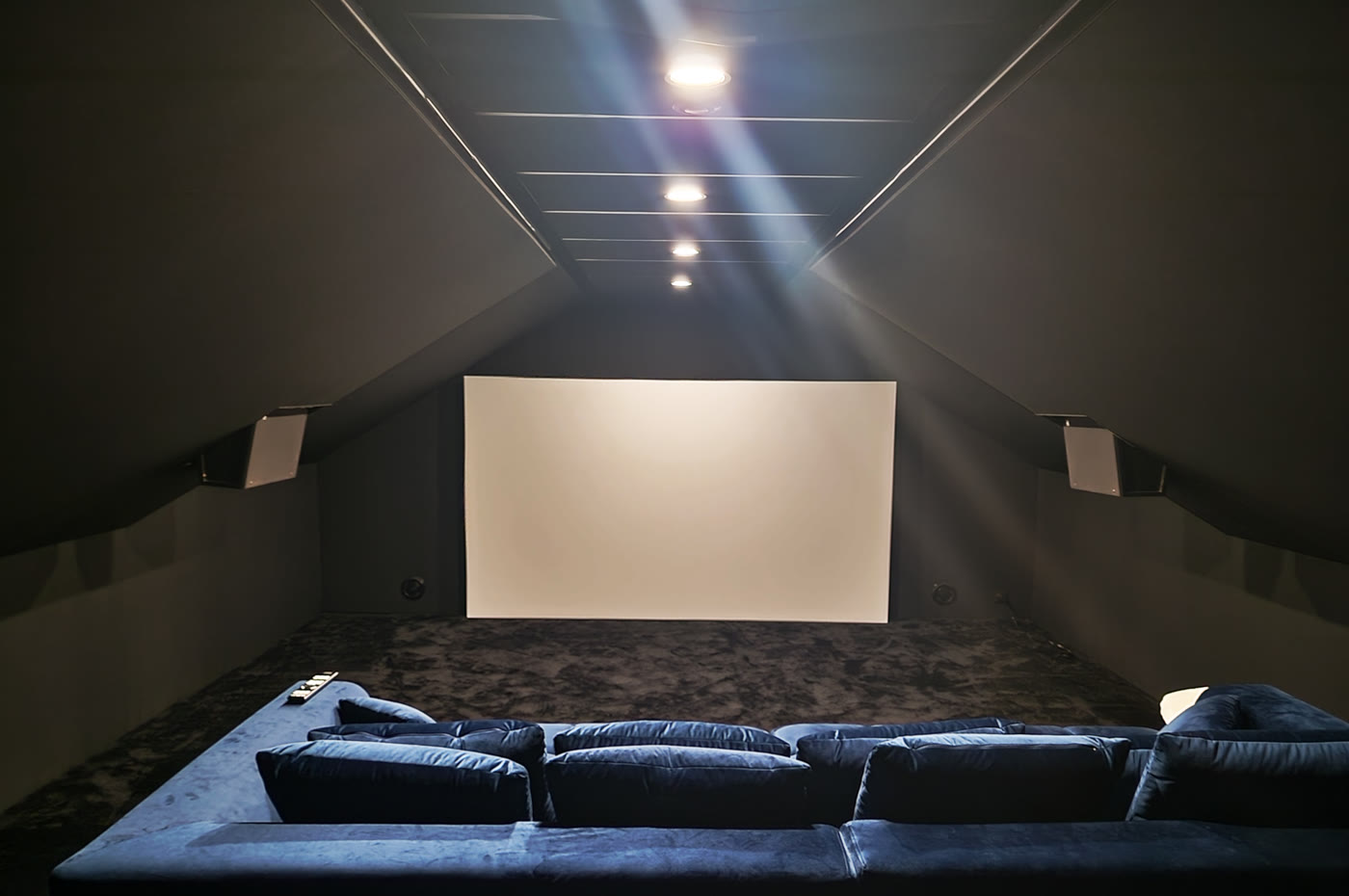
Before diving into an upgrade to Dolby Atmos, I wanted to know whether that transformation was really achievable without starting over. My room is under the roof slopes, and the array layout includes two side speakers.

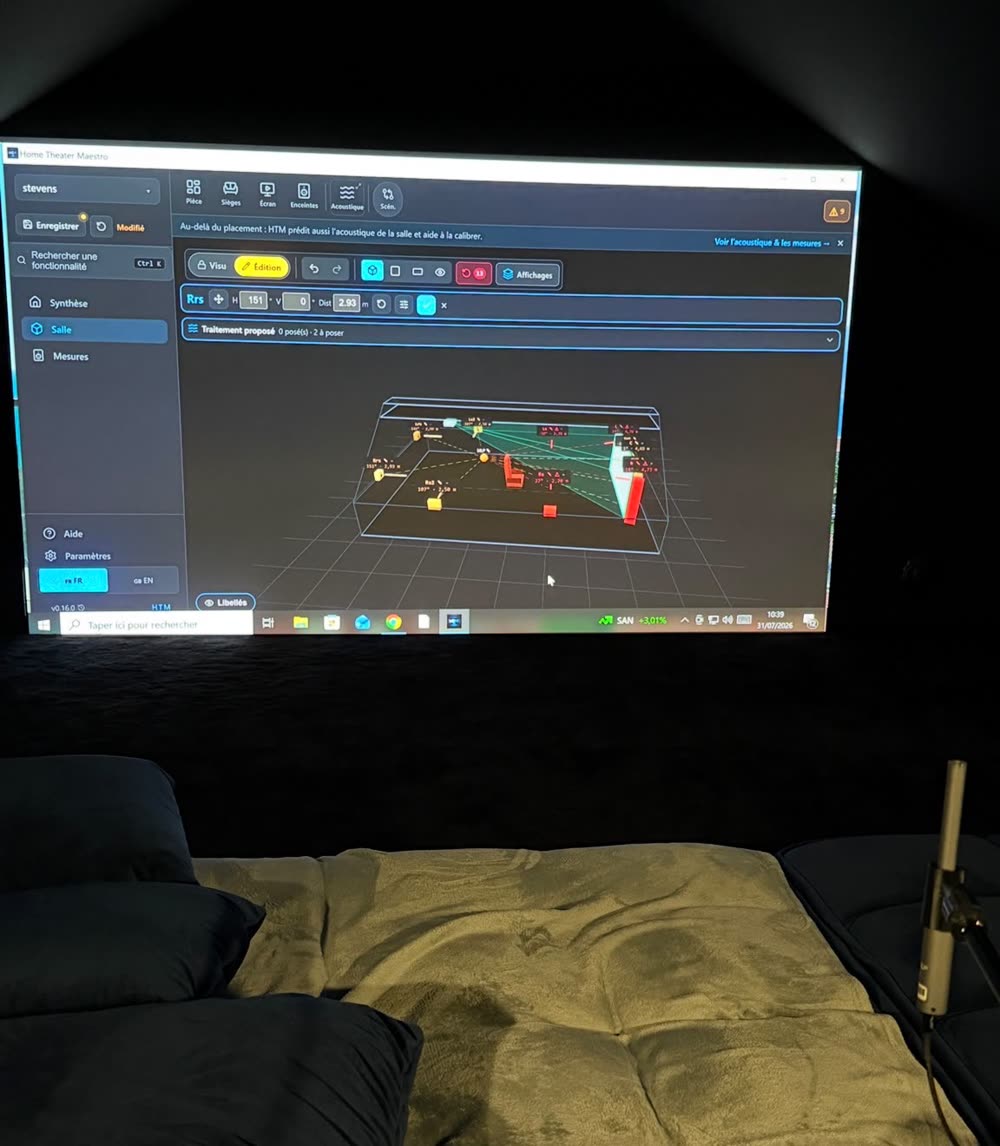
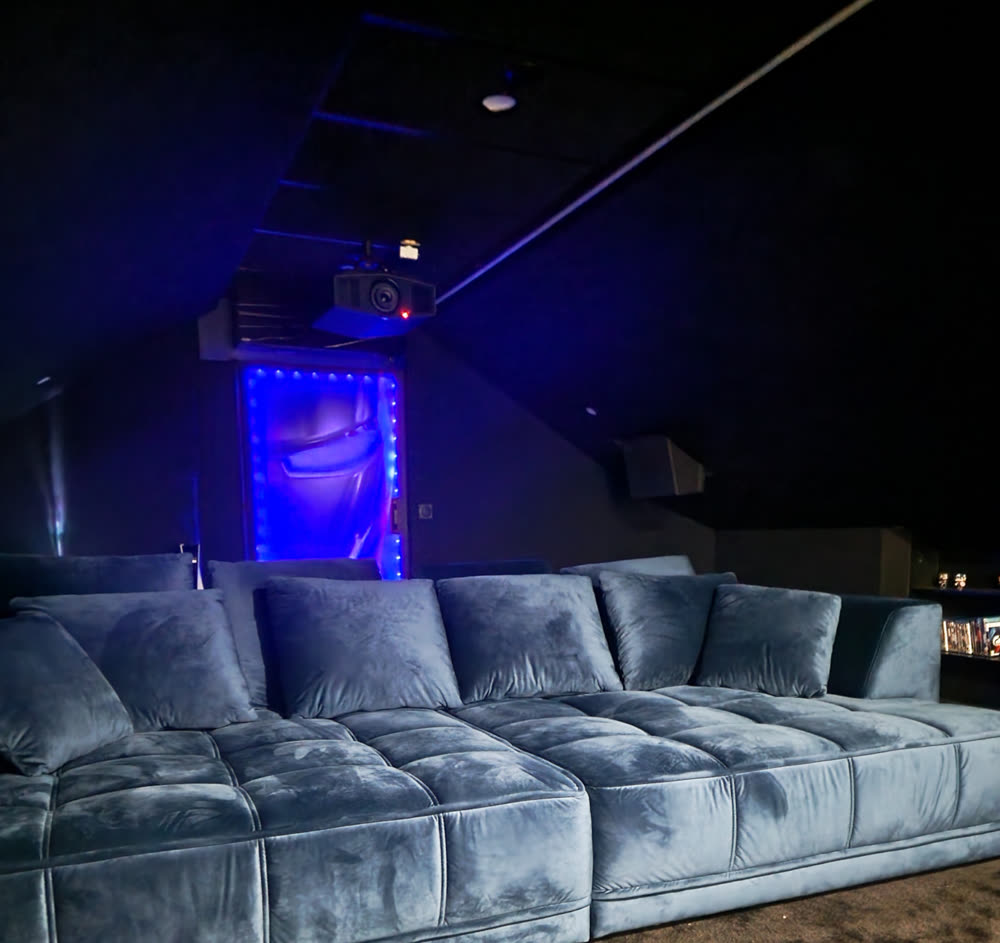
Steven's private cinema room under the roof slopes: screen, side speakers surface-mounted on the slopes, and tiered seating
Steven's room, under the roof slopes: screen, side speakers surface-mounted on the slopes, and tiered seating.

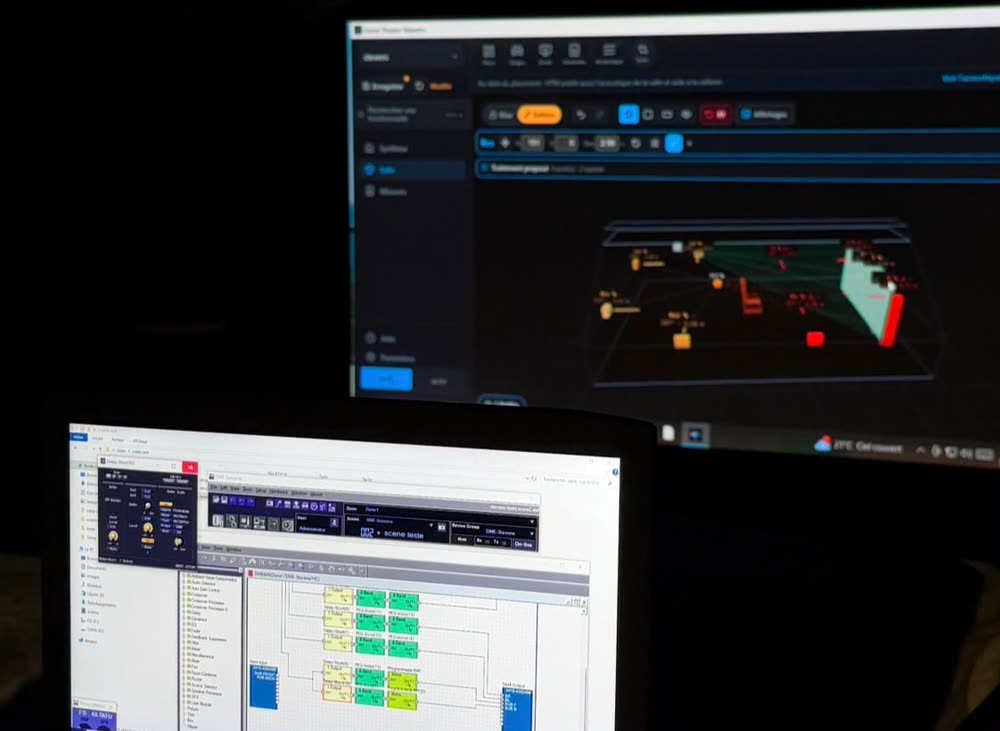
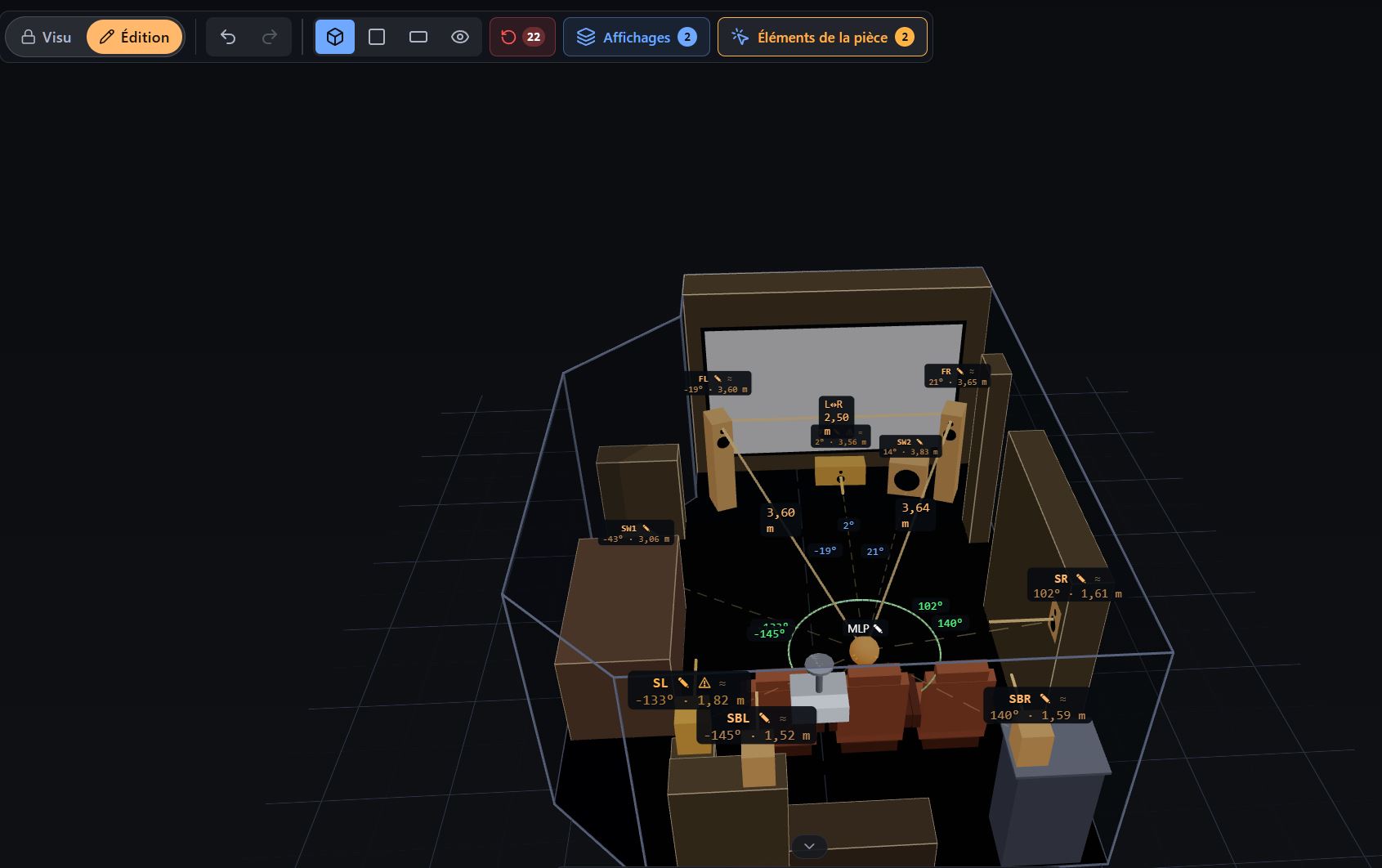
With HTM, I was able to quickly simulate several upgrade scenarios and see very concretely the benefits, but also the constraints of each option.

One of the points I cared about most was reusing my side-array speaker. Thanks to the simulations, I could see that its current position, slightly forward on the side, could potentially suit a Wide Atmos role, provided it was repositioned correctly.

Home Theater Maestro · Atmos upgrade study
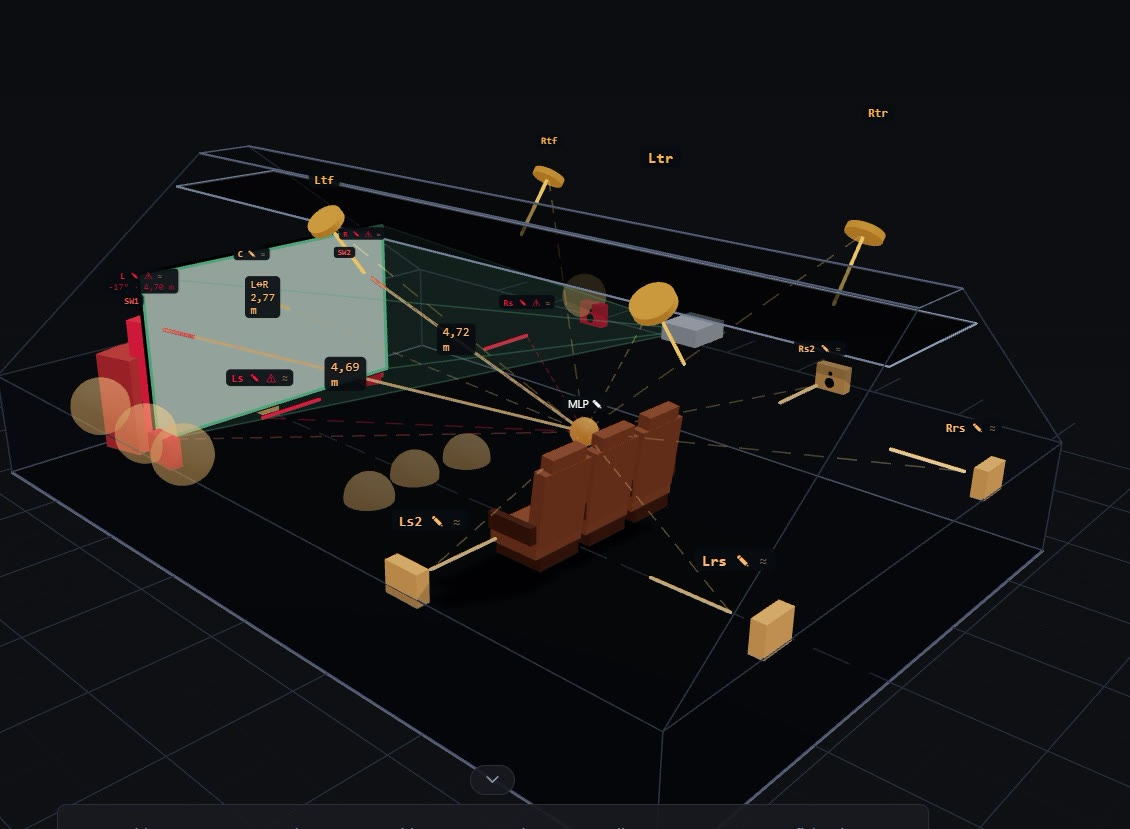
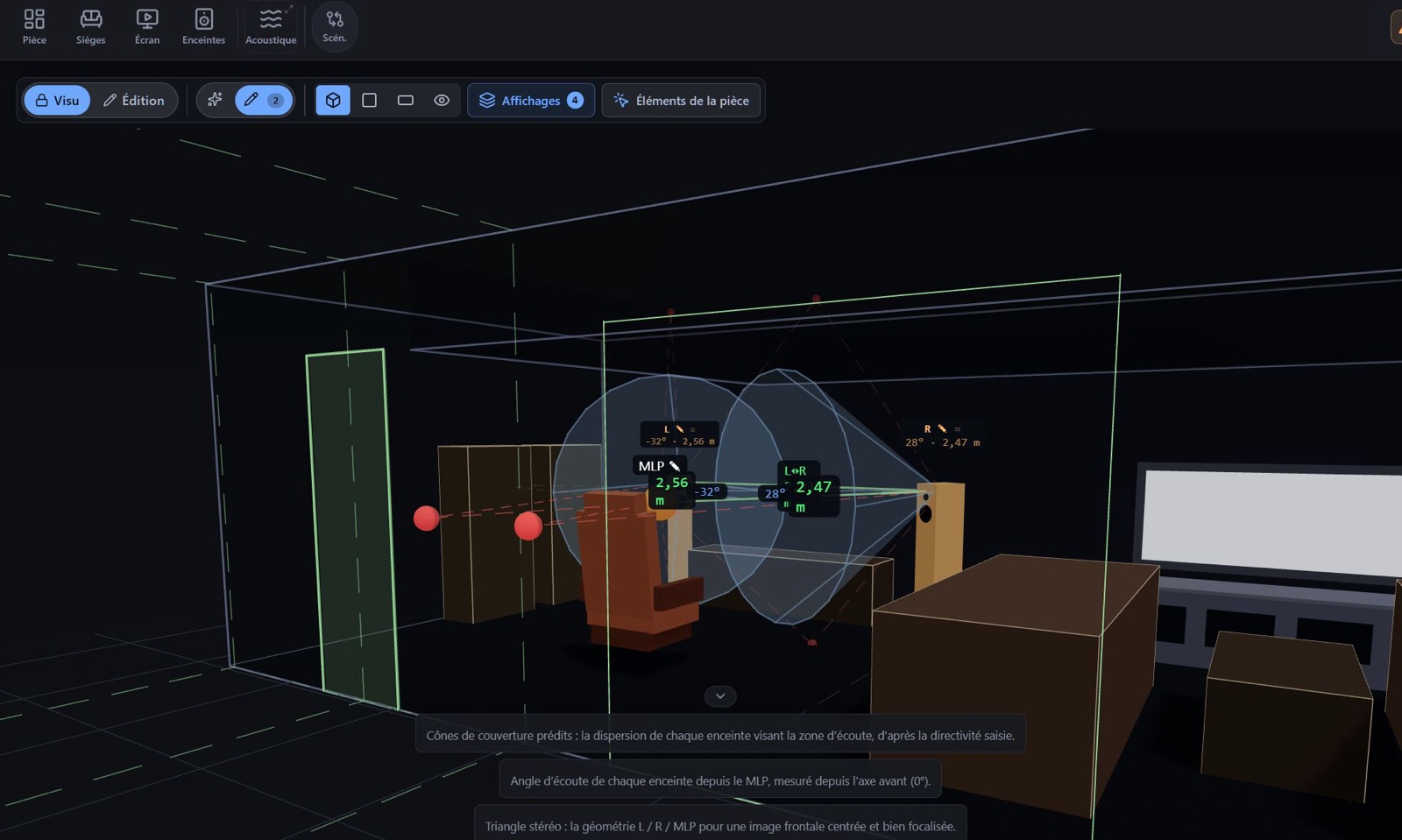
Steven's room modelled in Home Theater Maestro with a Dolby Atmos layout: speaker positions, distances to the listening position and screen area
Steven's room modelled in HTM: studying an upgrade scenario to Dolby Atmos, with speaker positions and distances to back it up.

This study let me know precisely what I could keep, what had to be changed, and what limits the geometry of my room imposed.

“Instead of moving forward blindly, I could make a decision backed by a real technical validation before starting the work.”Steven

Today, I know exactly which direction to take. All that is left is to get started and upgrade my room to Dolby Atmos.

Testing phase

Thanks to our Founders

Home Theater Maestro owes a lot to the Founders who agreed to test the application early and send us their feedback, room after room. Their expert and enthusiast perspective directly shaped the reliability of the tool.

  • Octave Bardet, acoustic engineer
  • Jean-Claude P. Fernandez, sound engineer
  • Yann, enthusiast, owner of a high-end immersive room
  • Grégory, systems engineer, owner of a reference listening system

Designing a room with HTM?

If you have compared HTM's predictions with your own measurements, your feedback will interest other users building their room.